
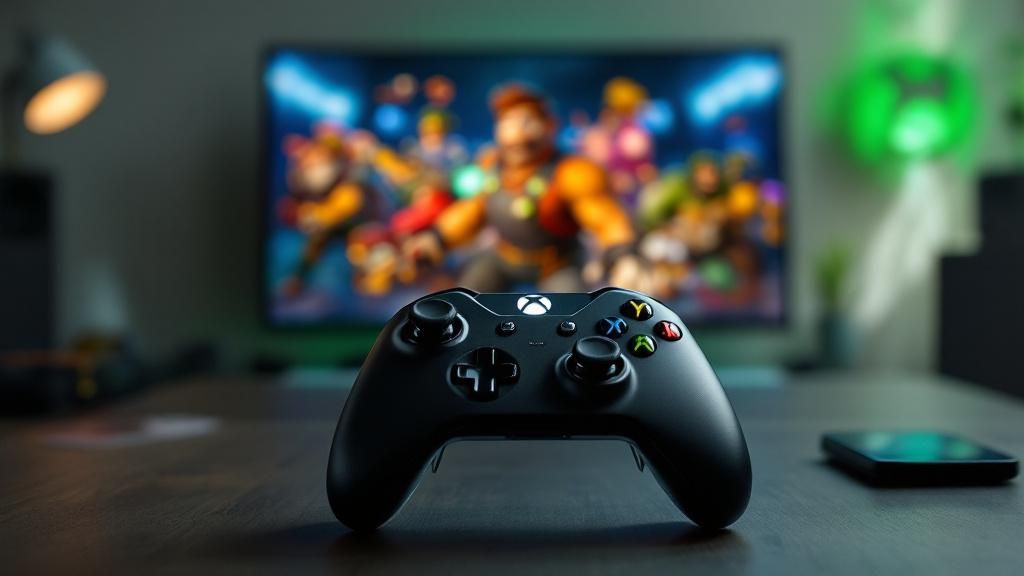
Microsoft’s Xbox Backwards Compatibility programme represents a innovative method for gaming preservation, allowing enthusiasts to replay beloved titles from earlier gaming systems on state-of-the-art hardware. Rather than consigning classic games to irrelevance, this pioneering initiative guarantees vintage classics perform flawlessly on contemporary Xbox systems, complete with improved performance and visual improvements. This article explores how the programme functions, examines its importance for gaming culture, and highlights the vast collection of revived games now accessible to current gamers.
The Evolution of Gaming By Way of Legacy Support
The idea of backwards compatibility has significantly reshaped how gamers interact with their beloved franchises across generations. Before Microsoft’s groundbreaking initiative, players encountered a frustrating situation: upgrading to advanced gaming systems often meant abandoning their accumulated game catalogues entirely. The Xbox Backwards Compatibility programme rejected the traditional model, acknowledging that gaming history warrants protection and availability. By enabling classic games to flourish on contemporary platforms, Microsoft showed real dedication to valuing customers’ purchases in previous-generation titles.
This transformation demonstrates far more than simple technical achievement; it signals a philosophical shift within the video game sector itself. Rather than viewing older games as outdated artefacts, backward compatibility acknowledges gaming’s rich heritage whilst harnessing modern system features. Players now experience enhanced frame rates, superior visual quality, and quicker load speeds on titles initially created for previous generation systems. This method has struck a chord with the gaming audience, establishing a precedent that values gaming’s past whilst adopting innovation and guaranteeing that beloved classics remain perpetually accessible.
How the Programme Operates and Its Impact on Gaming
The Xbox Backwards Compatibility programme works through sophisticated emulation technology and key collaborations with game publishers, enabling older titles to perform seamlessly on contemporary systems. Microsoft’s development staff meticulously optimise each game, guaranteeing compatibility whilst providing enhanced frame rates, improved resolution, and reduced loading times. This revolutionary method has fundamentally altered gaming culture, enabling gamers to seamlessly transition between generations and maintaining gaming heritage for coming players.
Technical Accomplishments and Emulation
The technical infrastructure underpinning backwards compatibility represents a impressive engineering achievement, requiring Microsoft’s developers to build sophisticated emulation layers that convert legacy code for contemporary processors. Rather than simply executing outdated software, the programme cleverly optimises games to exploit modern hardware capabilities, resulting in substantial performance improvements. These advancements demonstrate how thoughtful technical innovation can bridge generational gaps, transforming older experiences into genuinely compelling modern offerings.
Microsoft’s focus on technical quality extends beyond core capabilities, covering comprehensive testing protocols and ongoing refinement work. The company works closely with development teams and publishers, confirming every game gets proper focus and enhancement. This meticulous approach has set sector-leading benchmarks for historical compatibility, prompting industry peers and demonstrating that preserving gaming heritage doesn’t sacrifice contemporary quality standards.
- Improved refresh rates deliver faster, more fluid gaming performance.
- Improved resolution rendering presents games in sharp, vivid visual fidelity.
- Quicker load times remove lengthy waits during play transitions.
- FPS boost feature automatically optimises frame rates for supported titles.
- Smart Delivery guarantees gamers obtain suitable builds on all platforms.
The Next Chapter of Classic Games on Xbox Platforms
As Microsoft continues to expand its Backwards Compatibility initiative, the prospects of retro gaming on Xbox systems appears particularly bright. The company has shown unwavering dedication to maintaining gaming history whilst simultaneously modernising the experience for contemporary players. With each successive console generation, improved computational capacity enables teams to enhance legacy titles to a greater degree, providing better frame rates, higher resolutions, and improved gameplay systems that maintain the original vision whilst embracing technological advancement.
Looking ahead, the programme is set to feature an wider collection of treasured games, possibly spanning multiple decades of gaming history. Microsoft’s focus on backwards compatibility signifies a core transformation in market approach, recognising that gaming’s cultural importance extends beyond current releases. By making certain that beloved classics remain accessible and functional on modern hardware, Xbox remains cementing itself as the preferred platform for selective gamers who prioritise both innovation and preservation, ultimately enhancing the entire gaming ecosystem.
